

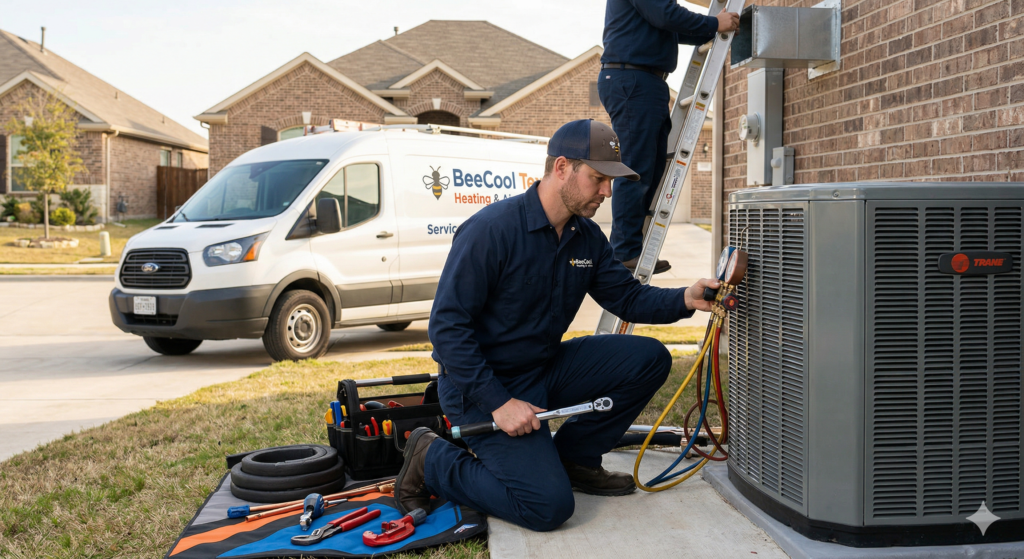
When you live in Texas, a functional heating and cooling system is more than just a modern convenience it is a vital component of your home’s safety and comfort. Between our sweltering, humid summers and unexpectedly bitter winter freezes, your home relies heavily on its climate control systems. But like all mechanical equipment, even the best air conditioners and furnaces eventually reach the end of their lifespan.
When repairs become too frequent or energy bills start skyrocketing, it might be time to consider a complete HVAC installation. Deciding to replace your system is a major investment, and navigating the options can feel overwhelming. What size unit do you need? What are the new efficiency ratings? How do you prepare for the big day?
In this comprehensive guide, the experts at BeeCool Texas Heating & Air break down everything you need to know about the HVAC installation process. From recognizing the signs that you need a heating and cooling replacement to understanding what happens on installation day, we are here to help you make an informed, confident decision for your home.
Recognizing When It’s Time for a New HVAC Installation
Homeowners often wonder whether they should repair their struggling system or bite the bullet and invest in a new one. While routine maintenance can significantly extend the life of your equipment, there comes a point where a professional HVAC replacement is the most cost-effective choice. Here are the top signs that a new system is on the horizon.
1. The Age of Your Current System
The average lifespan of a central air conditioning unit is about 10 to 15 years, while furnaces can last up to 15 to 20 years. If your equipment is approaching or has exceeded these age benchmarks, it is likely operating on borrowed time. Older systems are also significantly less efficient than modern units, meaning you are paying more for less comfort.
2. Rising Energy Bills
Have you noticed a steady climb in your monthly utility bills, even though your usage habits haven’t changed? As HVAC systems age, internal components wear down, forcing the unit to work harder and run longer to achieve the desired temperature. A sudden or gradual spike in energy costs is a strong indicator that your system is losing its efficiency.
3. Frequent and Costly Repairs
The “5,000 Rule” is a helpful metric in the HVAC industry: multiply the age of your equipment by the estimated cost of a repair. If the total exceeds $5,000, replacing the unit is generally the smarter financial move. If you find yourself on a first-name basis with your repair technician because of constant breakdowns, investing in a new AC system will save you money and frustration in the long run.
4. Uneven Temperatures and Poor Comfort
Are some rooms in your house freezing while others are stiflingly hot? Does your system struggle to maintain the temperature set on the thermostat? This inability to properly distribute conditioned air is a common symptom of a failing compressor or an improperly sized system.
Key Benefits of a Professional HVAC Installation
Upgrading your home’s climate control system offers a wealth of benefits that go far beyond basic temperature regulation. When you partner with a reputable HVAC contractor in Texas, a new installation transforms your living environment.
-
Improved Energy Efficiency: Modern energy-efficient HVAC systems utilize advanced technology, such as variable-speed motors and dual-stage compressors, which drastically reduce electricity consumption.
-
Enhanced Indoor Air Quality: New systems come with advanced filtration options and better moisture control, significantly reducing indoor humidity, dust, allergens, and mold growth.
-
Superior Reliability: A brand-new system provides peace of mind. You won’t have to worry about your AC dying on the hottest day of July or your furnace failing during a January freeze.
-
Quiet Operation: Thanks to modern acoustic design and vibration-reducing materials, today’s HVAC units operate at a whisper-quiet level compared to older, clunky models.
-
Increased Property Value: A modern, high-efficiency HVAC system is a major selling point for potential buyers if you ever decide to put your home on the market.
Choosing the Right Heating and Cooling Replacement
Selecting the perfect equipment is the most critical step of any HVAC installation. There is no “one-size-fits-all” solution; the right choice depends on your home’s unique architecture, your budget, and your family’s comfort preferences.
Proper Sizing: The Manual J Calculation
The biggest mistake a homeowner can make is installing a unit that is too large or too small for their home. An oversized unit will cool the house too quickly and shut off before it can remove humidity, leaving your home feeling clammy. An undersized unit will run constantly, driving up energy bills and burning out the motor.
To ensure precise sizing, a professional HVAC contractor in Texas will perform a “Manual J Calculation.” This load calculation takes into account your home’s square footage, window placement, insulation levels, ceiling height, and local climate to determine the exact heating and cooling capacity required.
Understanding SEER2 Ratings
When shopping for an energy-efficient HVAC system, you will encounter the term SEER2 (Seasonal Energy Efficiency Ratio 2). Updated in 2023, this rating measures the cooling output of an air conditioner over a typical cooling season divided by the energy it consumes.
-
The higher the SEER2 rating, the more energy-efficient the system is.
-
In Texas, the minimum required rating for new installations is 14.3 SEER2, but investing in an 18 to 20 SEER2 unit can yield massive long-term savings on your energy bills.
Types of HVAC Systems
Depending on your home’s existing infrastructure, you may choose from several system types:
-
Split Systems: The most common setup, featuring an outdoor condenser unit and an indoor air handler or furnace.
-
Packaged Systems: All heating and cooling components are housed in a single outdoor cabinet, usually placed on the roof or a concrete slab.
-
Heat Pumps: Highly efficient electric systems that provide both heating and cooling by transferring heat rather than generating it. These are increasingly popular in Texas due to our relatively mild shoulder seasons.
The HVAC Installation Process: What to Expect
Knowing what happens during an HVAC installation can alleviate much of the anxiety associated with home improvement projects. At BeeCool Texas Heating & Air, we follow a rigorous, step-by-step process to ensure flawless execution.
Step 1: Initial Assessment and Estimate
The process begins with an in-home consultation. One of our expert technicians will inspect your current system, evaluate your ductwork, perform load calculations, and discuss your comfort goals. We will then provide a transparent, detailed estimate outlining your options, complete with pricing and projected energy savings.
Step 2: Preparing Your Home
Before the installation crew arrives, it is helpful to clear the areas around your indoor and outdoor units. Move vehicles out of the driveway to give the installation truck easy access, and ensure pets are secured in a safe, quiet room away from the workspace.
Step 3: The Installation Day
Our professional installation team arrives on time and ready to work. The typical process involves:
-
Safe Removal: We carefully disconnect and safely remove your old equipment, ensuring proper disposal of old refrigerants in accordance with EPA regulations.
-
Ductwork Modifications: If necessary, we will repair or modify the plenum (the box connecting the HVAC unit to the ductwork) to ensure a perfect, airtight fit for the new unit.
-
Setting the Equipment: The new outdoor condenser is leveled on a sturdy pad, while the indoor air handler or furnace is securely positioned.
-
Connecting the Lines: We install new copper refrigerant lines, connect the electrical wiring, and tie the system into your home’s ductwork and exhaust flues.
-
Thermostat Installation: We upgrade or calibrate your thermostat often integrating a smart thermostat for maximum efficiency.
Step 4: Final Walkthrough and Testing
A professional HVAC replacement isn’t complete without rigorous testing. We charge the system with the precise amount of refrigerant, test the electrical draw, measure airflow, and run the system through full heating and cooling cycles. Finally, we walk you through the operation of your new equipment, show you how to change the air filters, and explain your warranty coverage.
Why Choose a Trusted HVAC Contractor in Texas?
Your HVAC system is only as good as the team that installs it. Even the most expensive, top-of-the-line air conditioner will fail prematurely if it is installed improperly.
At BeeCool Texas Heating & Air, we take immense pride in our craftsmanship and technical expertise. We adhere to the highest industry standards, ensuring that every wire, duct, and refrigerant line is perfectly calibrated. We don’t cut corners because we know that the safety and comfort of your family depend on our work. When you choose us for your HVAC installation, you are partnering with a company dedicated to transparency, integrity, and long-term customer satisfaction.
Frequently Asked Questions About HVAC Installation
How long does a standard HVAC installation take? In most residential cases, a complete system replacement (both indoor and outdoor units) takes one full day, typically between 8 to 10 hours. Complex installations involving extensive ductwork replacement may take longer.
Does a new installation include new ductwork? Not necessarily. If your existing ductwork is clean, properly sized, and free of leaks, we will connect the new system to it. However, if your ducts are damaged, undersized, or heavily contaminated, we will recommend replacing or sealing them to ensure your new system operates efficiently.
Are there financing options available for a new AC system? Yes! We understand that an HVAC installation is a significant investment. BeeCool Texas Heating & Air offers flexible financing options with approved credit to help you get the system you need without breaking the bank.
Conclusion: Upgrade Your Comfort Today
Dealing with a failing air conditioner or a dying furnace is incredibly stressful, but replacing it doesn’t have to be. By understanding the signs of system failure, exploring your equipment options, and partnering with experienced professionals, a new HVAC installation can be a smooth and rewarding experience.
Investing in a modern, energy-efficient HVAC system will lower your monthly utility bills, vastly improve your indoor air quality, and provide unwavering comfort through the hottest Texas summers and the coldest winter nights.
Are you ready to transform your home’s comfort? Trust the experts at BeeCool Texas Heating & Air for your heating and cooling replacement. Contact us today to schedule your comprehensive in-home consultation and receive a free, no-obligation estimate on a brand-new HVAC system!