

Running a successful business requires juggling a dozen different priorities at once. But when the brutal summer heat hits, nothing brings your operations to a grinding halt faster than a failing air conditioning system.
Whether you manage a bustling retail store, a large office space, or a massive industrial warehouse, your indoor climate directly impacts your bottom line. Uncomfortable customers leave quickly, and overheated employees simply can’t do their best work.
That is exactly why investing in professional commercial HVAC services is not just an option it is an absolute necessity.
In this comprehensive guide, we will break down everything you need to know about commercial heating, ventilation, and air conditioning. From routine maintenance to signs that you need an upgrade, here is how you can maximize efficiency and keep your business running comfortably all year round.
What Are Commercial HVAC Services?
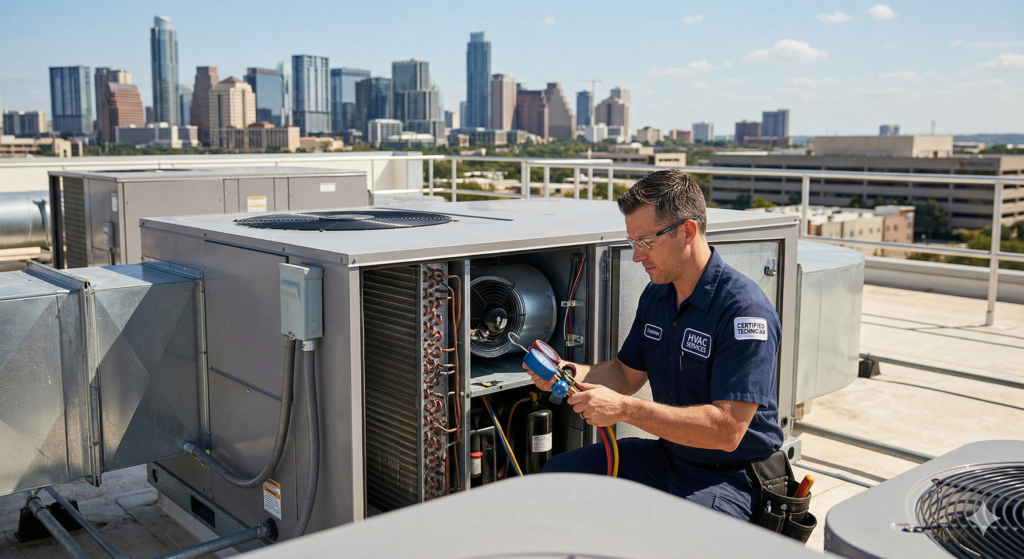
What exactly do commercial HVAC services include? Commercial HVAC services encompass the professional installation, routine maintenance, emergency repair, and eventual replacement of large-scale heating and cooling systems used in business facilities. Unlike residential units, commercial systems are heavily complex, engineered to manage massive square footage, heavy foot traffic, and stringent indoor air quality (IAQ) standards. These services ensure that rooftop units (RTUs), chillers, commercial boilers, and complex ductwork are all operating at peak performance.
When you hire a commercial HVAC contractor, you are partnering with specialized technicians who understand the unique structural and electrical demands of commercial properties.
Why Your Business Needs Professional Commercial HVAC Services
Ignoring your building’s climate control system is a recipe for disaster. Relying on professional services provides a massive return on investment. Here is why regular commercial HVAC maintenance is vital for your business.
Enhanced Energy Efficiency
Heating and cooling account for the largest chunk of a commercial building’s energy use. If your system is running with dirty filters, clogged coils, or leaking ductwork, it has to work twice as hard to produce the same amount of air.
Routine commercial HVAC services keep your system running cleanly and efficiently. This translates directly into lower monthly utility bills, allowing you to reinvest those savings back into your business.
Improved Indoor Air Quality (IAQ)
The air circulating through your office or storefront directly affects the health of everyone inside. Poor ventilation can lead to a buildup of allergens, dust, mold spores, and even airborne viruses.
Commercial HVAC maintenance includes thorough cleaning and specialized filtration upgrades. Clean air means healthier employees, fewer sick days, and a more productive work environment.
Extending the Lifespan of Your Equipment
Commercial HVAC systems require a massive upfront capital investment. You want that equipment to last as long as humanly possible.
Just like changing the oil in your delivery vehicles, regular tune-ups reduce the wear and tear on your climate control systems. Preventative maintenance can add years to the lifespan of your commercial AC units and industrial heaters.
Reducing Costly Emergency Repairs
There is nothing worse than your air conditioning breaking down on the hottest day of the year. Emergency repairs are stressful, disruptive, and often expensive.
By utilizing routine commercial HVAC services, technicians can spot minor issues—like a worn-out fan belt or a slow refrigerant leak—before they turn into catastrophic system failures.
Key Components of Commercial HVAC Maintenance
Optimizing for a featured snippet, here is a quick checklist of what a comprehensive commercial HVAC maintenance plan should include:
-
Air Filter Replacement: Swapping out heavy-duty commercial filters to ensure maximum airflow.
-
Coil Cleaning: Removing dirt and debris from evaporator and condenser coils to prevent freezing and overheating.
-
Refrigerant Level Checks: Ensuring the system has the exact chemical charge needed to cool efficiently.
-
Electrical Inspection: Tightening loose connections and testing voltage to prevent fire hazards.
-
Thermostat Calibration: Ensuring multi-zone commercial thermostats are reading temperatures accurately.
-
Drain Pan and Line Clearing: Removing algae and blockages to prevent costly water damage to your ceilings and inventory.
-
Moving Parts Lubrication: Reducing friction on motors and fans to lower electricity consumption.
Signs It’s Time to Upgrade Your Commercial HVAC System
Even with the best maintenance, no piece of machinery lasts forever. How do you know when it is time to stop repairing and start replacing? Keep an eye out for these red flags.
Rising Energy Bills
Have you noticed a sudden, unexplained spike in your commercial energy costs? If your utility rates haven’t changed but your bills are skyrocketing, your aging HVAC system is likely losing its efficiency and struggling to keep up.
Inconsistent Temperatures
Does your building have annoying hot and cold spots? If the breakroom is freezing but the main sales floor is sweltering, your system is failing to distribute air evenly. This usually points to failing blower motors or severely compromised ductwork.
Strange Noises and Odors
A healthy commercial HVAC system should operate quietly in the background. If you hear loud grinding, squealing, or banging noises coming from your vents or rooftop, shut the system down and call a professional immediately.
Similarly, musty smells indicate mold in the ductwork, while burning odors suggest a dangerous electrical issue.
The 15-Year Rule
Most commercial air conditioning and heating units are designed to last between 15 and 20 years. If your equipment is approaching this age, it uses outdated technology and banned refrigerants (like R-22). Upgrading to a modern, energy-efficient system will pay for itself in energy savings over time.
Commercial vs. Residential HVAC: What’s the Difference?
Many business owners make the mistake of hiring a residential AC repairman to fix a commercial system. This is a costly error. Here is why commercial systems require specialized expertise:
-
Size and Complexity: Commercial units are significantly larger, requiring more power and complex custom ductwork to heat and cool massive spaces.
-
Placement: While residential units sit nicely in the backyard, commercial systems are often packaged units placed directly on the roof. This saves valuable real estate but requires specialized equipment to install and service.
-
Drainage Systems: A residential AC has a simple drip pan. A commercial unit deals with gallons of condensation daily, requiring complex, multi-pipe drainage systems to prevent rooftop flooding.
-
Modular Design: Commercial systems are modular. This means technicians can add or remove components as your building’s needs grow, which requires advanced engineering knowledge.
How to Choose the Right Commercial HVAC Contractor
Not all heating and cooling companies are created equal. When your business operations are on the line, you need a partner you can trust implicitly. Here is what to look for:
Proven Commercial Experience
Do not be someone’s guinea pig. Ensure the company has a long track record of explicitly handling commercial and industrial HVAC systems, not just residential home repairs.
Proper Licensing and Insurance
Commercial properties have strict building codes. Make sure your contractor holds all the necessary state licenses and carries robust liability insurance to protect your property in case of an accident.
Fast Response Times
When the AC dies in a retail store, every minute costs you money. Look for a contractor that offers rapid, reliable response times to minimize your business downtime.
Customized Maintenance Contracts
Avoid cookie-cutter solutions. The right commercial HVAC provider will assess your specific building layout, hours of operation, and budget to create a highly customized preventative maintenance plan tailored exactly to your needs.
Conclusion: Partner With the Best for Your Business
Your business relies on a dependable, efficient climate control system to keep doors open and customers happy. Don’t wait for a total system failure to start thinking about your building’s heating and cooling needs.
By investing in professional commercial HVAC services, you are protecting your assets, lowering your overhead costs, and creating a healthier environment for your staff and clients.
When it comes to keeping Texas businesses comfortable, Bee Cool Texas is your ultimate partner. Our team of highly trained, licensed professionals understands the unique demands of commercial systems in the brutal Texas climate.
Whether you need emergency repairs, routine maintenance, or a massive system overhaul, we deliver prompt, professional, and transparent service every single time.
Don’t let HVAC issues disrupt your business. Visit Bee Cool Texas today to schedule your commercial HVAC consultation and experience the difference of true professional expertise!