

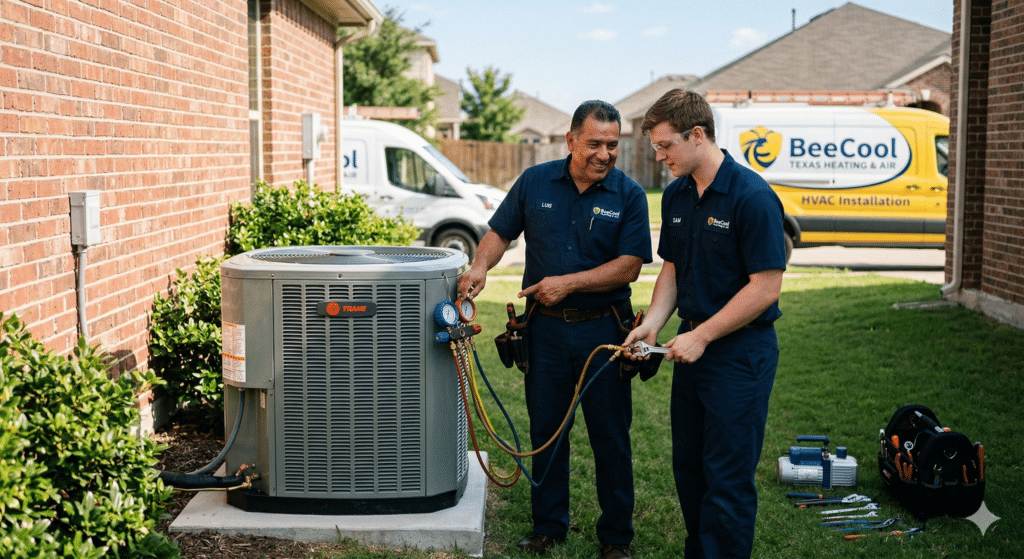
Surviving the extreme temperature swings in Texas requires more than just a functional air conditioner and heater; it requires a home climate system that operates at peak efficiency. Whether you are building a new home, renovating an older property, or finally upgrading a system that has seen its last summer, a proper HVAC installation is the most critical factor in your long-term comfort and energy savings.
Many homeowners focus heavily on the brand of the equipment they purchase, but industry experts know a secret: the quality of the installation matters just as much, if not more, than the equipment itself. Even the most advanced, top-tier air conditioning unit will fail to cool your home efficiently if it is installed incorrectly.
In this comprehensive guide, we will walk you through everything you need to know about the HVAC installation process. From recognizing the signs that you need an upgrade to understanding system sizing and choosing a professional HVAC contractor, BeeCool Texas is here to ensure your next investment is a resounding success.
When Is It Time for a New AC System Replacement?
Deciding between repairing an old unit and investing in a new one can be stressful. HVAC systems represent a significant investment, but holding onto a failing system can cost you more in the long run through exorbitant energy bills and continuous repair fees.
Here are the undeniable signs that it is time for a new AC system replacement:
-
The System is Over 10-15 Years Old: The average lifespan of a central air conditioner in Texas is roughly 10 to 15 years, largely due to the intense summer workload. If your system is in this age bracket, its efficiency has likely plummeted.
-
Frequent and Costly Repairs: If you are calling a technician multiple times a year, or if the cost of an upcoming repair exceeds 50% of the value of a new system, replacement is the more economical choice.
-
Uneven Temperatures: Are some rooms freezing while others feel like a sauna? This indicates that your system is losing its capacity to distribute air evenly, which could be a sign of a failing compressor or poorly designed ductwork.
-
Rising Energy Bills: As components wear out, the system must run longer and harder to achieve the same indoor temperature, causing a steady spike in your monthly utility costs.
-
Use of R-22 Freon: If your older system uses R-22 refrigerant (which has been phased out due to environmental regulations), simply recharging a leak can be astronomically expensive. Upgrading is the only sustainable long-term solution.
The Dangers of Improper Sizing: Why Load Calculation Matters
One of the most common mistakes made during a sub-par HAVC installation is improper system sizing. When it comes to HVAC units, “bigger” does not mean “better.”
To determine the exact size (measured in tonnage or BTUs) your home needs, a professional HVAC installation contractor will perform a Manual J Load Calculation. This complex assessment goes far beyond just measuring the square footage of your house. It takes into account:
-
The number, size, and orientation of your windows.
-
The amount and quality of insulation in your walls and attic.
-
The height of your ceilings.
-
The local Texas climate data.
-
The amount of heat generated by appliances and occupants.
What Happens if Your System is the Wrong Size?
-
Oversized Systems: Will “short-cycle” (turn on and off too quickly). This prevents the unit from running long enough to remove humidity from the air, leaving your home feeling cold but clammy. It also causes rapid wear and tear on the compressor.
-
Undersized Systems: Will run continuously, struggling to reach the temperature set on your thermostat. This drives up your energy bills and leads to premature system failure.
At BeeCool Texas, we never guess. We perform meticulous load calculations for every single HVAC installation to guarantee your new system is a perfect match for your home’s unique thermal footprint.
Choosing an Energy-Efficient HVAC System
Modern HVAC installation technology has evolved dramatically over the last decade. Upgrading today means you can take advantage of incredibly efficient features that keep your home comfortable while slashing your carbon footprint and energy bills.
When planning your installation, look for these features:
1. High SEER2 Ratings
The Seasonal Energy Efficiency Ratio (SEER2) measures how efficiently a cooling system will operate over a typical season. The higher the number, the less energy the system consumes. In Texas, the minimum required SEER2 rating for new installations is 14.3, but investing in a system with a rating of 18 or higher can yield massive long-term savings.
2. Variable-Speed Compressors
Older systems use single-stage compressors, meaning they run at 100% capacity until the house reaches the desired temperature, then shut off completely. An energy-efficient HVAC unit with a variable-speed compressor operates more like a car’s accelerator, adjusting its output precisely to maintain the temperature. This results in whisper-quiet operation and superior humidity control.
3. Smart Thermostat Integration
Your new system should seamlessly pair with a smart thermostat. These devices learn your living habits and optimize heating and cooling schedules, ensuring you never pay to condition an empty house.
The HVAC Installation Process: Step-by-Step
Understanding what happens on installation day can help alleviate any anxiety. Here is a clear, step-by-step breakdown of what to expect when the BeeCool Texas team arrives at your property.
Step 1: Pre-Installation Inspection and Site Prep
Before removing the old unit, the lead technician will review the installation plan with you. We inspect the installation area, lay down protective drop cloths, and ensure all tools and equipment are safely staged to protect your property.
Step 2: Safe Removal of the Old System
We begin by carefully extracting the existing refrigerant from your old air conditioner, adhering to strict EPA guidelines to prevent environmental contamination. We then disconnect the electrical wiring, remove the old condenser (outside) and the air handler or furnace (inside), and haul the old equipment away for proper recycling.
Step 3: Ductwork and Infrastructure Evaluation
Before the new equipment goes in, a professional HVAC contractor will inspect the supporting infrastructure. We check the existing ductwork for leaks, blockages, or collapsed sections. If modifications are needed to support the airflow of the new, more powerful system, we handle it now. We also prepare a new, level pad for the outdoor condenser.
Step 4: The Physical Installation
We carefully position the new indoor and outdoor units. This involves complex plumbing and electrical work, including:
-
Custom-fitting sheet metal transitions to connect the new air handler to your existing ductwork.
-
Brazing new copper refrigerant lines to ensure a leak-proof system.
-
Upgrading electrical wiring and installing a new disconnect box for enhanced safety.
-
Installing a new PVC condensate drain line to prevent water damage.
Step 5: System Testing and Calibration
Once the physical HAVC installation is complete, we do not just turn it on and walk away. We pull a deep vacuum on the refrigerant lines to remove any moisture and non-condensable gases. Then, we charge the system with the exact amount of refrigerant specified by the manufacturer. Finally, we run the system through a complete cooling and heating cycle, measuring airflow, checking electrical draws, and calibrating the thermostat.
How to Prepare Your Home for Installation Day
To ensure a smooth, efficient installation process, homeowners can take a few simple steps before the technicians arrive:
-
Clear the Pathways: Ensure there is a clear, unobstructed path from your driveway to both the indoor and outdoor installation sites. Move any furniture, rugs, or fragile items.
-
Secure Pets and Children: Installation involves heavy equipment, electrical work, and open doors. Keep pets in a closed room and ensure children are kept safely away from the work zones.
-
Trim Outdoor Vegetation: If your outdoor condenser is surrounded by bushes or tall grass, trim it back to give the technicians at least three feet of working clearance.
-
Be Available: While you do not need to hover over the technicians, an adult should be present to answer any questions, provide access to the electrical panel, and participate in the final system walkthrough.
Why Choose BeeCool Texas for Your Next Project?
An HVAC installation is a complex, highly technical process that requires plumbing, electrical, and sheet metal expertise. Trusting an amateur or a “chuck-in-a-truck” can lead to voided manufacturer warranties, dangerous electrical hazards, and years of subpar performance.
At BeeCool Texas, we pride ourselves on delivering E-E-A-T (Experience, Expertise, Authority, and Trustworthiness) on every single job.
-
Expertise: Our technicians are fully licensed, insured, and continuously trained on the latest high-efficiency systems and installation codes.
-
Transparency: We provide upfront, honest pricing with zero hidden fees. You will know exactly what you are paying for before we loosen a single bolt.
-
Respect for Your Property: We treat your home as if it were our own. Our crews wear shoe covers, use protective mats, and leave their work areas cleaner than they found them.
-
Unmatched Warranties: Because we stand behind the quality of our craftsmanship, we offer robust labor warranties alongside the manufacturer’s equipment warranty.
Conclusion: Invest in Long-Term Comfort Today
A professional HVAC installation is not just about beating the Texas heat; it is an investment in your home’s value, your family’s daily comfort, and your long-term financial savings. By choosing the right equipment, ensuring precise sizing, and partnering with an experienced team, you can enjoy a perfect indoor climate for over a decade.
Do not let an aging, inefficient system dictate your comfort or drain your bank account. Trust the experts who understand exactly what it takes to keep Texas homes cool, clean, and comfortable year-round.
Ready to upgrade your home’s climate control? Contact BeeCool Texas Heating & Air today to schedule a comprehensive assessment and get a free, no-obligation quote on your next installation!